

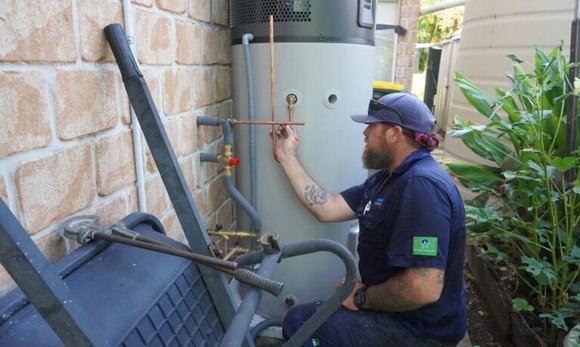
The Ultimate Guide to Choosing a Heat Pump
Heat pumps are not the most visible feature of your home, and choosing the right one can be complex because it isn’t one-size-fits-all. When selecting a new heat pump, consider the climate, your needs, your budget, and the potential for government incentives.
Understanding Your Needs
Buying a heat pump is a long-term investment – lasting around 15 years. By breaking down your needs, you can narrow the field. Here are some considerations for choosing the right heat pump.
Climate Consideration
A heat pump is essentially a refrigerator in reverse, sucking heat from outside to warm water, but due to the varied climates across Australia, you must choose one rated for where you live. In Tasmania or the Southern Highlands, the climate demands a CO2-based refrigerant. However, if you’re in a high-humidity area like Darwin or Townsville, the Coefficient of Performance (COP) is key to finding the right heat pump.
Household Needs
Size is one of the most common heat pump mistakes, and it can be a painful one. If you live in a household of two, a 200L tank should be more than enough, but 300L would be more appropriate for a household of four. Reclaim offers tank sizes up to 400L.
When it comes to space heating, calculate your needs before purchasing, as an undersized unit will work constantly, leading to higher energy bills and a shorter lifespan. If you live in an open-plan layout with space, you need at least 5.0kW, whereas a smaller space may require as little as 2.0kW. This is where getting professional advice comes in handy.
Split Versus All-in-One
The all-in-one unit means that everything is located in a single outdoor unit, which makes installation more straightforward, but requires more external space. A split system locates the tank and compressor separately, which is ideal for tight spaces while still segregating the noisy compressor from your living space.
Financial Considerations
The cheapest isn’t always the best choice, but neither is the most expensive. Think of your heat pump as an investment in future-proofing your home. While you may need to spend $8,000 up-front, heat pumps typically repay the investment within five years due to high efficiency. However, many states provide incentives that can reduce costs by as much as $1,800, depending on your location. Always ensure the installer is accredited to claim the relevant rebate.
Key Specs
There are three key specs when looking at heat pumps: COP, noise, and refrigerant. The lowest COP rating you should consider is 3.5, but the higher the COP, the better the performance. It simply tells you how much power you get versus what you pay for. For example, if the COP rating is 5, you get 5kW of heat for every 1kW of power you pay for. While solar power doesn’t directly alter the COP rating, it does influence its operation, which can further reduce your bills.
While decibel rating is an important factor to consider, also look for units that specifically state they are silent or low noise models. Many of these units are quiet enough to be installed next to your bedroom window without disturbing your sleep.
There is a wide range of refrigerant types, and rather than trying to understand what each of them means, you can look at their GWP rating, which stands for Global Warming Potential. The lower the GWP rating, the more environmentally friendly the heat pump unit.
The Big Names Broken Down
There are many companies in the market, all claiming to be the most efficient. To help break it down, let’s compare the top brands.
| Manufacturer | Sanden | Rheem | Apricus | Reclaim | Enviroheat |
| Verified Reviews | 3.6/5 ⭐ | 4.8/5 ⭐ | 4.6/5 ⭐ | 4.9/5 ⭐ | 4.5/5 ⭐ |
| Price point |
$$$$$ |
$ |
$$$ |
$$$$$ |
$$$ |
| Savings
Potential |
Potential savings of up to 80%
|
Potential savings of up to 73%
|
Potential savings of up to 70%
|
Potential savings of up to 80%
|
Potential savings of up to 71% |
| Maintenance | Full Service is required every 5 years and requires annual valve activation. | Full Service is required every 5 years and requires annual valve activation. | Full Service is required every 5 years and requires annual valve activation. | Full Service is required every 3 years and requires annual valve activation.
|
Annual service and regular filter change. |
| COP |
5.0 |
4.5 |
4.13 |
Average 5.0 | Average 3.0 |
| Household Members | Available in small to XL sizes | Up to 5 | Up to 6 | Available in small to XL sizes | Up to 5 |
| Tank Proportions | 580–621mm | 690mm | 620mm | 528–701 mm | 629mm |
| Tank Capacity | 160 – 315L | 280L | 260L | 160 – 400L | 250L |
| Solar Power Compatible | Yes | In-built controllers for maximum efficiency. | In-built controllers for maximum efficiency. | In-built controllers for maximum efficiency. | Yes |
| Recovery Rate | Up to 79 L per hour | Up to 71 L per hour | 65 L per hour | 65 L per hour | 40 L per hour |
| Operating Temperature Range | -10C – +42C | -5C – +43C | -7C – +43C | -10C – +43C | -7C – +75C |
| Refrigerant | R744 (GWP of 1) | R134a/R513a (GWP of 500+) | R290 (GWP of 3) | R744 (GWP of 1) | R134a |
| Split/All in One | Split | All in One | All in One | Split | All in One |
| Noise | 37 dB (a nearby whisper) | 47 dB (refrigerator noise) | 43 dB (refrigerator noise) | 37 dB (a nearby whisper) | 46 dB (refrigerator noise) |
| Rebates | STC | STC | STC | STC | STC |
| Warranty | 6-year pump warranty.
15-year tank warranty.
|
7-year cylinder warranty. |
6-year warranty (parts and labour). | 6-year pump warranty.
15-year tank warranty. |
7-year tank warranty.
2-year electrical component warranty.
5-year compressor warranty. |
| User-Friendliness | Smart Controller – Use the app for total efficiency. | A simple LED touch-screen display. | Set it, forget it. | Smart controller panel. | Smart controls. |
| Smart Features | WiFi control via smartphone or tablet. | Smart touch screen control. | WiFi-enabled controls. | ||
| Installation | Licenced Plumber | Licenced Plumber | Licenced Plumber | Licenced Plumber | Licenced Plumber |
| Features |
This system uses just 20% of the power a standard system does, but you can further optimise usage with block-out timers. |
Provides rapid water heating due to microchannel heating and variable temperature controls for maximum efficacy. |
Use the mobile app to take control of your usage.
|
Comes with built-in Legionella Control for enhanced safety.
|
Automatic sanitation. |
| Manufacturing | Australia/Japan | Australia | Australia/ China | Australia/Japan | China |
Narrowing it Down
Which one is your match? It depends on your home. Consider the following:
- Reliable and longevity. If you want a system that will outlive your mortgage with limited fuss, choose a stainless-steel tank that’s corrosion resistant.
Top pick: Sanden or Reclaim.
Best for: Coastal areas or anyone who doesn’t want to book a service every two years. - Solar optimisation. For maximum return on investment and to take advantage of your current solar panel system, you want a unit that allows you to lock out the heating cycle during peak grid times.
Top picks: Apricus, Rheem or Enviroheat.
Best for: Keeping your energy bills low for hot water. - Peace and quiet. If noise is an issue (medium-density housing), choose a system that allows you to tuck the noisy compressor away. Top picks: Sanden or Reclaim.
Best for: Townhouses, duplexes and installations near bedrooms. - High demand. Do you have a large family or are you running water through big rain showerheads? If so, you need a tank that has a high recovery speed.
Top picks: Rheem or Sanden.
Best for: Large families or high water use.
Summing Up
If you’re feeling overwhelmed by the options, always do your research by comparing models, asking questions, reading reviews, and securing multiple quotes. A high-efficiency model may have a higher upfront cost, but do the long-term maths and consider how much you could save on energy bills.
States vary on rebates and incentives, but explore what your local government or utility programs provide before you buy! The task may seem daunting, but if you arm yourself with accurate information, you can make an informed decision that will pay dividends.
Sydney Unleashed is one of Australia’s premier entertainment publications exploring the latest in lifestyle trends. From Sydney’s finest restaurants, cafes and bars to the hottest in gadgets, products, and home entertainment, Sydney Unleashed is your one-stop lifestyle platform.