

D-Link A/NZ expands its Tech Essentials range in Australia
D-Link A/NZ has expanded its Tech Essentials range in Australia with three new devices built around a single problem that has followed the modern workstation home: a capable laptop with too few ports and not enough places to plug anything in.
The line-up spans a full USB4 docking station and two USB-C hubs with different strengths. Together they cover the range of ways people now work, whether that is a permanent desk with two monitors, a kitchen table that doubles as an office, a hot-desk in a shared building or a bag that has to carry everything between the two.
“Hybrid work has made every desk, meeting room and kitchen table a potential workstation and the humble laptop port has become a bottleneck,” said Graeme Reardon, MD, D-Link A/NZ. “This range gives businesses and professionals a simple, affordable way to get full productivity from the hardware they already have, from a single-cable USB4 desk setup to presenting wirelessly in any meeting room.”
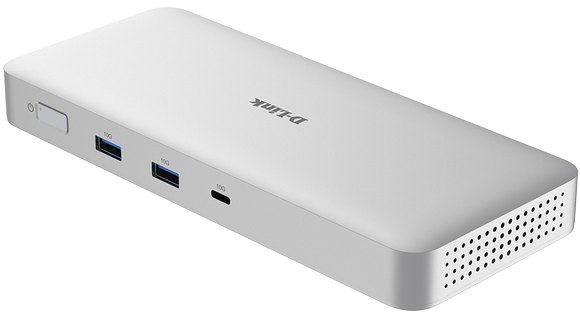
The DUF-901 is a nine-in-one USB4 docking station, and it is the most capable device in the range. It supports up to 40Gbps data transfer through its USB4 port, which is fast enough to make external storage and recording devices feel native rather than attached. The dock is also Thunderbolt 4 compatible and works with Windows 10 and 11, macOS and Android. Two DisplayPort 1.4 connections and a multifunction USB-C port with DisplayPort Alt Mode deliver dual-monitor support, including 8K at 30Hz on a single display, so a laptop can drive a proper production desktop without compromise.
Networking is handled by a 2.5G Ethernet port, which is more than twice the speed of standard gigabit and a meaningful upgrade for anyone moving large files, joining video calls or working with cloud-based systems. Power delivery runs at up to 100 watts through USB-PD 3.0, so a laptop charges while it drives displays and moves data. A single power button switches every port on or off at once, which is a small detail that matters on a desk you want to shut down in one movement at the end of the day. The housing is aluminium alloy with ventilation holes to dissipate heat under load, at 190 x 80 x 22 millimetres and 332 grams (RRP $379.95).
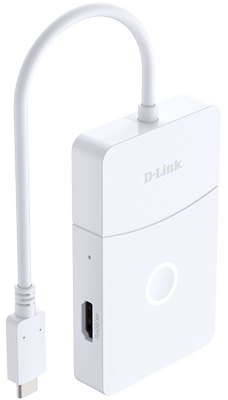
The DUP-501 is a five-in-one USB-C hub with a feature that no other device here offers: wireless HDMI. A front button switches between wired HDMI 2.0 at 4K and 60Hz, and wireless HDMI at Full HD 1080p and 60Hz. The wireless mode runs on the 5GHz band up to 30 metres, chosen deliberately because 5GHz is less congested than 2.4GHz and reduces interference from Bluetooth devices and microwave ovens.
For anyone who has stood in a meeting room untangling a cable that will not reach, or waited while a colleague fights a conference system, the practical value is obvious. The wireless receiver is built into a cable with an HDMI connector at one end and a USB connector at the other, so it plugs straight into the display and draws its power from the display’s own USB port, with no separate power supply needed. There are no apps, drivers or Wi-Fi setup required, which means a client, a visitor or a colleague can present from their own device without anything being installed.
It carries two USB-C and one USB-A data port at USB 3.2 Gen 1 speeds up to 5Gbps, plus a USB-C PD port accepting up to 100 watts input for up to 85 watts of laptop charging. Audio transmits over both wired and wireless HDMI. It works with Windows 10 and 11, macOS and Android, at 90 x 55 x 15 millimetres and 61.5 grams (RRP $199.95).
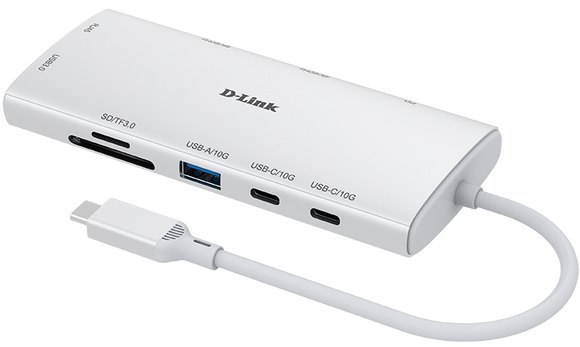
The DUP-A01 is a ten-port multifunction USB-C hub and the strongest all-rounder for someone who needs displays, storage and networking in a bag. Two HDMI 2.0 ports support single or dual displays at up to 4K (3840 x 2160) and 60Hz each. Two USB-C and one USB-A port run at USB 3.2 Gen 2 speeds up to 10Gbps, with a further USB-A port at 5Gbps for older peripherals.
It adds a gigabit Ethernet port for wired connectivity where Wi-Fi is unreliable or slow, plus SD and microSD 3.0 card slots supporting cards up to 2TB. That combination suits photographers, video editors and anyone whose work involves moving large files off a camera card. Power delivery passes through at up to 100 watts, with up to 85 watts reaching the connected laptop, so the hub does not cost a port to stay charged. The metal housing measures 125 x 55.4 x 16.6 millimetres and weighs 98.5 grams. It is compatible with macOS, Windows 10 and 11 and Android (RRP $129.95).
The pattern across the range is that each device removes a small daily irritation that people have quietly accepted. A laptop that has to be unplugged from its monitor before the charger can be used. A presentation delayed because the cable is the wrong length. A camera card that needs an adapter before its contents can be read.
For a business, that translates into something more measurable. Hot-desking works when a single cable turns any available desk into a full workstation. Hybrid and remote staff are more productive when their home setup matches their office setup rather than approximating it. Fewer devices mean less equipment to buy, issue, track and replace across a workforce.
For consumers and professionals buying for themselves, the logic is simpler. These are devices that make the hardware already owned work better, rather than replacing it. A laptop bought two years ago with two usable ports becomes a machine that drives two screens and reads a camera card while doing it.
All three products are available now in Australia at www.dlink.com.au and through D-Link’s retail and distribution partners.
Sydney Unleashed is one of Australia’s premier entertainment publications exploring the latest in lifestyle trends. From Sydney’s finest restaurants, cafes and bars to the hottest in gadgets, products, and home entertainment, Sydney Unleashed is your one-stop lifestyle platform.